How to Choose the Right Dumpster Size for Your Project in Asheville, NC
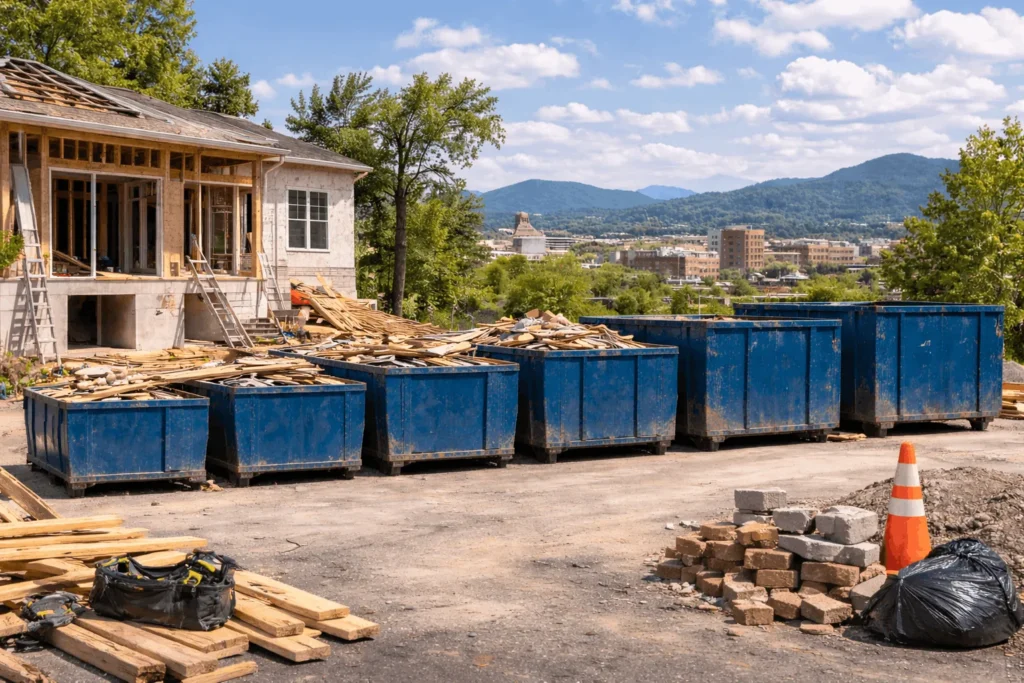
Picking the wrong dumpster size is one of the most common and easily avoidable mistakes people make when renting a container in Asheville. Order too small and you’re paying for a second haul or cramming debris in ways that create safety issues. Order too large and you’re paying for capacity you never used. Neither outcome is good when you’re already spending money on a renovation, cleanout, or construction project.
This guide walks you through every container size available, what each one actually holds in practical terms, and how to match the right size to your specific project. By the end you’ll know exactly what to order without having to guess.
How Dumpster Sizes Actually Work
Before getting into the sizes themselves, it helps to understand what the numbers mean. Dumpster sizes are measured in cubic yards. One cubic yard is a cube that measures three feet on each side. A 10-yard dumpster holds 10 of those cubes worth of material. A 20-yard holds 20.
That number refers to volume, not weight. This matters because two 20-yard dumpsters loaded with different materials can weigh completely different amounts. One filled with light household furniture and carpet weighs a fraction of one filled with roofing shingles and broken concrete. Most rental agreements in Asheville include a weight limit alongside the volume capacity, and exceeding that limit triggers an overage charge per ton. Keep that in mind when your project involves heavy materials like tile, masonry, or roofing.
The physical dimensions of the container also matter for placement. Longer containers take up more driveway space. Taller containers have higher walls that are harder to throw debris over. If you’re working on a tight property off a narrow street in Kenilworth or on a hillside lot above Lakeshore Drive, the physical footprint of the container is worth thinking through before delivery day.
The 7-Yard Dumpster
The 7-yard container is the smallest option in most rental fleets. It’s compact enough to fit on driveways where a larger container would be tight, and it works well for small, focused cleanup jobs.
In practical terms, a 7-yard dumpster holds roughly the equivalent of two to three full pickup truck loads of debris. That’s not a lot of volume, but it’s enough for the right projects.
Projects that fit a 7-yard container:
A single room cleanout where you’re clearing out furniture, boxes, and accumulated household items. A garage cleanout that doesn’t involve major construction debris. A small bathroom renovation where you’re replacing fixtures and tile in a tight space. A minor landscaping cleanup involving trimmed branches, yard waste, and light debris. Deck repair jobs where you’re replacing boards but not tearing out the full structure.
Who orders a 7-yard in Asheville:
Homeowners in older neighborhoods like Montford or West Asheville who are clearing out a single room in a smaller bungalow. Landlords turning over a rental unit and clearing out a previous tenant’s belongings. Small businesses doing a minor office cleanout near downtown.
If your project scope creeps at all beyond what you planned, a 7-yard fills up faster than you expect. When in doubt between a 7 and a 10, take the 10. The price difference is small and the difference in available space is significant.
The 10-Yard Dumpster
The 10-yard is the most popular size for residential projects in Asheville and across Buncombe County. It hits the right balance of capacity and physical footprint for most standard home projects, and it fits comfortably on most residential driveways without dominating the entire space.
A 10-yard container holds roughly three to four full pickup truck loads of debris. Think of it as capable of handling one room of serious renovation waste or two to three rooms of lighter cleanout material.
Projects that fit a 10-yard container:
A bathroom gut renovation including tile demo, drywall removal, fixture removal, and general debris. A kitchen renovation of average size where you’re removing cabinets, countertops, flooring, and appliances. A basement or attic cleanout that has accumulated years of stored items and light construction debris. A single room addition demo. A small roofing job on a shed, garage, or small residential structure. Flooring replacement across two or three rooms including carpet removal, underlayment, and old hardwood.
Who orders a 10-yard in Asheville:
Contractors running single-trade renovation jobs throughout the city. Homeowners doing their first serious renovation in neighborhoods like Haw Creek, Emma, or North Asheville. Property managers turning over units in multi-family buildings near downtown. Families doing full house cleanouts before a sale.
The 10-yard is the right call when your project is well-defined and you have a clear sense of what’s coming out. If your project involves any structural demolition, multiple rooms, or materials you’re unsure about, size up to a 15 or 20.
Quick question: I’m replacing carpet in my whole house. Will a 10-yard be enough?
For carpet removal alone across a standard 1,500 to 2,000 square foot home, a 10-yard is usually sufficient. Carpet compresses well and rolls up efficiently. If you’re also pulling out the underlayment, removing baseboard, and doing any subfloor work alongside the carpet, bump up to a 15-yard to give yourself room.
The 15-Yard Dumpster
The 15-yard sits in a useful middle position that doesn’t always get the attention it deserves. A lot of people jump from a 10 straight to a 20 when a 15 would have been the right call. It holds roughly four to five pickup truck loads of debris and offers meaningfully more capacity than a 10 without the full footprint and cost of a 20.
Projects that fit a 15-yard container:
A full kitchen renovation including cabinet removal, countertop demo, flooring, appliances, drywall, and light plumbing and electrical debris. A master bathroom renovation in a larger home. Flooring replacement across an entire single-story house. A deck demolition on a standard residential structure. A two-room gut renovation in an older home. A mid-size landscaping project involving sod removal, shrub clearing, and light soil work. A garage cleanout that includes some construction debris alongside general household items.
Who orders a 15-yard in Asheville:
Remodeling contractors doing single-room gut jobs on larger homes in neighborhoods like Kenilworth, Biltmore Forest, or North Asheville. Homeowners taking on multi-room flooring or renovation projects. Landlords doing between-tenant renovation work on older rental properties throughout Buncombe County.
If you’ve been going back and forth between a 10 and a 20, the 15 is often the right answer. It costs less than a 20 but carries significantly more than a 10, and for mid-size projects it hits the sweet spot on both cost and capacity.
The 20-Yard Dumpster
The 20-yard is the standard choice for full home renovation projects and larger single-trade jobs. It holds roughly six pickup truck loads of debris and handles the kind of mixed, multi-material loads that come out of serious renovation work on Asheville’s older housing stock.
Most driveways in Asheville can accommodate a 20-yard container, though it will take up a larger portion of the space than a 10 or 15. For properties on steeper lots or with shorter driveways, confirm dimensions with your rental company before booking.
Projects that fit a 20-yard container:
A full home renovation covering multiple rooms including kitchen, bathrooms, and living areas. A large deck demolition or replacement. A full roofing job on a standard to larger residential home. An addition build that generates mixed framing, drywall, and general construction debris. A commercial tenant improvement or office renovation of moderate size. A large estate cleanout involving furniture, appliances, and accumulated household contents across a full home. Full interior demo on a house being prepped for a major rehab.
Who orders a 20-yard in Asheville:
General contractors running full renovation projects on homes throughout the city. Investors doing full property rehabs on older homes in West Asheville, the River Arts District neighborhood, or Oakley. Property owners clearing out and renovating before a sale. Roofing contractors servicing larger residential properties in Asheville and the surrounding communities.
Quick question: I’m doing a full gut rehab on a 1960s ranch house in Arden. Is a 20-yard enough?
For a full gut of a standard ranch home, a 20-yard will often fill up before the job is done, especially if you’re taking walls down to the studs and removing flooring throughout. Budget for a swap-out or start with a 30-yard if you want to avoid a second haul charge. The debris volume from full interior demolition consistently surprises people who haven’t done it before.
The 30-Yard Dumpster
The 30-yard moves into the territory of serious construction and demolition work. It holds roughly nine pickup truck loads of material and is physically larger than most residential containers, so placement planning matters more at this size.
Most standard residential driveways can technically accommodate a 30-yard, but the container will dominate the space. For properties in dense urban neighborhoods or on steep hillside lots, confirm access and placement options with your rental company before delivery.
Projects that fit a 30-yard container:
A large full home renovation or gut rehab on a bigger residential structure. New construction builds on residential lots where lumber scraps, drywall offcuts, and general construction debris accumulate across multiple phases. Large commercial tenant improvements. Multi-room demolition projects on commercial or mixed-use properties. Major landscaping and site work involving significant soil, rock, and vegetation removal. Full property cleanouts involving large volumes of furniture, appliances, and household contents.
Who orders a 30-yard in Asheville:
General contractors managing new construction projects across Buncombe County. Developers doing full property rehabs. Commercial clients running tenant improvement projects on retail or office space along corridors like Merrimon Avenue, Tunnel Road, or Brevard Road. Property management companies handling major unit turnovers or building-wide renovations.
The 40-Yard Dumpster
The 40-yard is the largest container in most rental fleets and is suited to large-scale commercial and industrial projects. It holds roughly twelve pickup truck loads of material and requires significant space for placement. Most residential driveways cannot accommodate a 40-yard without special consideration, and delivery requires adequate road access for the truck.
Projects that fit a 40-yard container:
Large commercial demolitions. Multi-unit residential building cleanouts or renovations. Major construction projects with high debris volume across multiple phases. Industrial facility cleanouts. Whole-structure teardowns where the debris volume is substantial.
Who orders a 40-yard in Asheville:
Commercial contractors, demolition companies, and large-scale property developers. Property managers overseeing building-wide projects. Industrial clients handling large facility transitions.
For most residential clients in Asheville, the 40-yard is more container than you need. If you’re a homeowner or small contractor wondering whether to go with a 30 or a 40, the answer is almost always the 30 with a swap-out scheduled if needed.
How to Estimate Your Project’s Debris Volume
The size guides above give you a solid starting point, but here’s a simple way to think through your own project before you call.
Walk through the space you’re working on and mentally identify every category of material coming out. Count rooms. Note whether you’re doing surface-level work like flooring and painting or structural work like wall removal and framing demo. Think through how heavy the material is. Tile, concrete, and brick are dense and will hit weight limits faster than carpet, drywall, and light furniture.
Then use this rough framework as a starting point. One room of light cleanout material, go with a 7 or 10. One room of full renovation demo, go with a 10 or 15. Multiple rooms of renovation work or a full-floor gut, go with a 20. Whole-house renovation or new construction debris, go with a 30. Large commercial or multi-unit work, go with a 30 or 40.
When you’re genuinely unsure, size up rather than down. The cost difference between container sizes is small relative to the cost of a second haul or an overloaded container. Overage charges on weight and the logistics of ordering a second container mid-project almost always cost more than simply starting with the next size up.
Special Considerations for Asheville Projects
A few things about working in Asheville specifically affect which size makes sense for your project.
Older housing stock means more debris per square foot. A 1,200 square foot bungalow in Montford being stripped back to the studs generates more debris than a 1,200 square foot modern house with lighter wall assemblies, thinner trim packages, and fewer layers of flooring built up over decades. If you’re working on an older home anywhere in the established Asheville neighborhoods, your debris volume will likely exceed what you’d expect based on square footage alone.
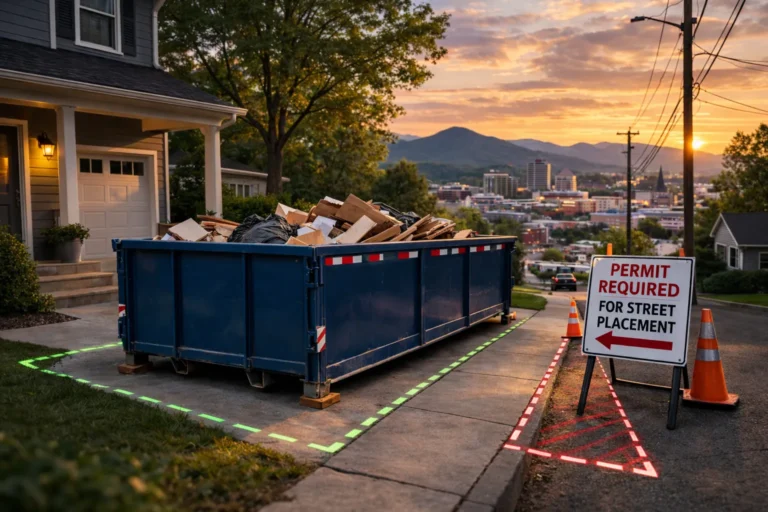
Mountain terrain limits access on some properties. Steep driveways off Elk Mountain Scenic Highway, tight switchback roads above Lakeshore Drive, and rural private roads in parts of Leicester or Fairview may limit which container sizes a delivery truck can physically reach. Always mention your access situation when you book. A good local rental company will ask about it and flag any concerns before delivery day rather than discovering the problem when the truck arrives.
Project scope in Asheville often expands once walls open up. This is true everywhere but especially on older homes in this market. When you open walls in a pre-1960 house near Chestnut Hill or in a craftsman bungalow near Emma Road, you frequently find additional layers of material, old insulation, unexpected plumbing configurations, and other surprises that add debris volume you didn’t plan for. If your project is on an older structure and you have any flexibility in your size choice, build in a buffer.
A Simple Size Reference
To make this easy to reference when you’re ready to book, here’s how each size maps to common projects in Asheville:
7-yard: Single room cleanout, small garage cleanout, minor landscaping, small bathroom fixture swap
10-yard: Bathroom gut, kitchen renovation, basement or attic cleanout, carpet removal across a full home, small roofing job
15-yard: Full kitchen renovation, master bath renovation, deck demolition, multi-room flooring replacement, mid-size landscaping
20-yard: Full home renovation across multiple rooms, large deck replacement, standard to large roofing job, full estate cleanout, commercial tenant improvement
30-yard: Large full home gut rehab, new residential construction, large commercial renovation, major landscaping and site work, multi-room commercial demo
40-yard: Large commercial demolition, multi-unit building projects, industrial cleanouts, whole-structure teardowns
Frequently Asked Questions
What happens if my dumpster fills up before my project is done? Call your rental company and schedule a swap-out. They’ll haul the full container and drop a fresh one. This is common on larger renovation projects and most companies in Asheville handle it regularly. It’s worth asking about swap-out pricing when you book so there are no surprises.
Can I overfill a dumpster past the top? No. All containers have a fill line at the top of the walls. Material cannot extend above this line because it creates a hazard during transport and can violate load requirements at the disposal facility. If your container reaches the fill line before your project is done, call for a swap-out rather than loading above it.
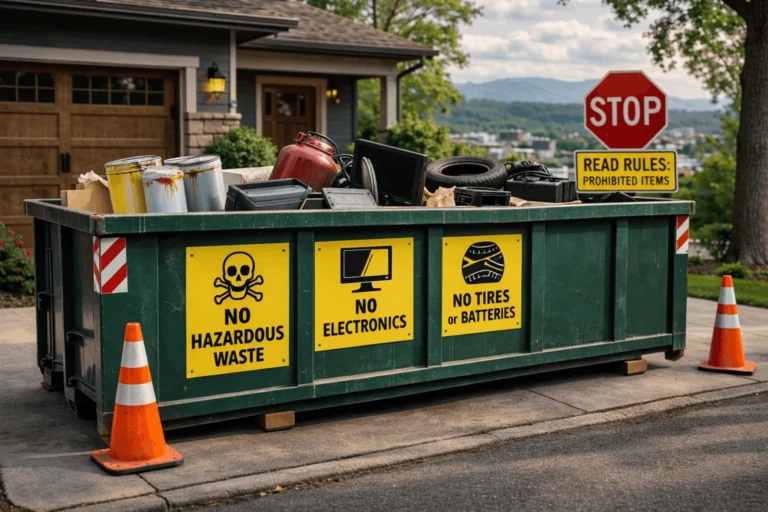
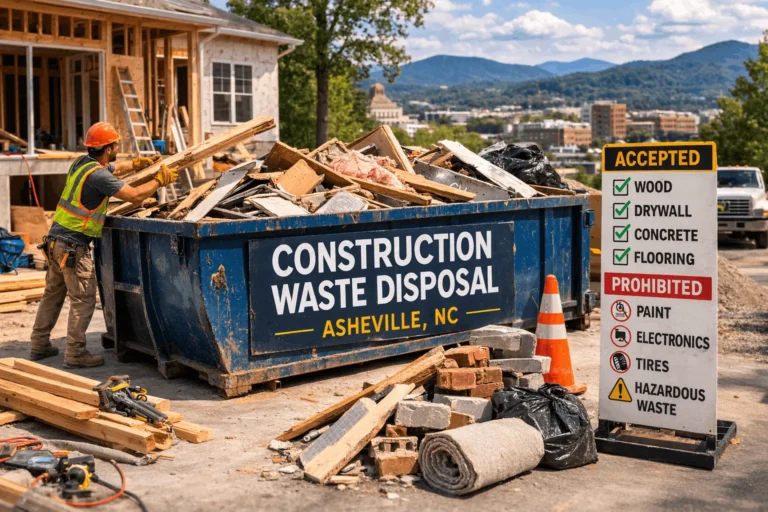
Does the dumpster size affect what materials I can put in it? No. Prohibited materials are the same regardless of container size. What you can and cannot throw in a dumpster is determined by the facility’s acceptance rules and state regulations, not by the container size you rent.
What if I’m not sure whether to get a 10 or a 15? When you’re genuinely between two sizes, go with the larger one. The price difference is small and the peace of mind of having extra capacity is worth it. Running out of space mid-project and waiting for a swap-out costs more in lost time than the upgrade.
Do heavier materials like concrete count toward the weight limit even if there’s still volume left? Yes. Weight limits and volume limits are separate. A container can look half-empty and still be over its weight limit if it’s loaded with concrete, tile, or roofing shingles. Always ask your rental company what the weight allowance is on your container and what the overage rate is per ton if you’re planning a debris-heavy project.
Can I get a dumpster delivered the same day in Asheville? Yes, same-day delivery is available in many cases across Asheville and Buncombe County. Call early in the day and confirm availability when you book.
Is a larger dumpster harder to get into my driveway? Bigger containers require longer trucks and more maneuvering room on delivery and pickup. For properties on tight streets or with short driveways, always mention your access situation when you call. A good local company will confirm whether your address is reachable with a given container size before scheduling delivery.
Ready to Order the Right Size?
You now have everything you need to make a confident decision before you call. Think through your project scope, factor in the material types coming out, and use the size guide above as your reference point. When you’re between two sizes, go bigger.
When you book with us, we’ll ask about your project and help you confirm the right container before we schedule delivery. We know the neighborhoods, the access points, and the project types that come with working across Asheville and Buncombe County, and we’ll make sure you get the right size to the right spot on the day you need it.
Get a free quote today. Same-day and next-day delivery available across Asheville, Weaverville, Black Mountain, Arden, Candler, and surrounding areas.